Two Different Races
On reality TV, Confucianism and naming the unnamed

“I had learned to keep my head down during each storm, and eventually, the skies always cleared enough to continue forward.” — Chapter 13: When Storms Become Seasons
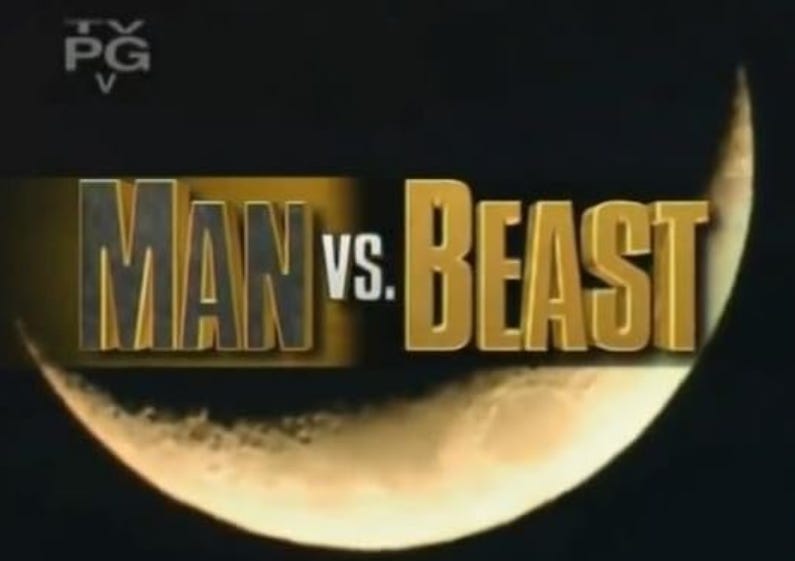
The most epic run of unhinged reality television shows occurred from 2003-2004. Off the top of my head, there was The Surreal Life, The Simple Life, Joe Millionaire, Average Joe, Paradise Hotel, Playing it Straight, Joe Schmo Show, My Big Fat Obnoxious Boss; even ESPN got in on the act with Who Wants to be a Super SportsCenter Anchor? But my favorite of all was Man vs. Beast where humans were pitted against animals in a variety of competitions, including a 100m dash between a professional track athlete and a zebra. I’ll never forget Carl Lewis doing the play-by-play commentary and remarking that the key for the zebra to win the race was to “realize that it is in a race.”
I grew up with a love for television and movies. Perhaps it was compounded by the fact that I was an only child and had nothing else to entertain me. Or that my parents did not allow me to watch television until I finished all my work, which only made me want to watch television more. I would consume anything and everything from critically acclaimed to absolute junk (as you probably discerned from above). But my favorites were the ones that were core to American mythology of the underdog toppling the evil empire. Star Wars, Karate Kid, The Goonies, Braveheart, Hunger Games, The Matrix. This American culture has been embedded within us since the Revolutionary War. We question authority and when warranted, we have the right to rebel. The right to fight back.
However, in many immigrant Asian households like my own, kids had limited rights to fight back. Arguments didn’t get resolved. They got buried. There are a few days of icy silence, a meal where nobody makes eye contact, and then everyone just pretends it never happened. The fight is over, not because anything was settled, but because acknowledging it would be a continuation of the disrespect, which is somehow worse than the original offense.
At dinner just the other day I asked my parents if I was difficult to raise. My father looked up and said “Yes,” and then went back to eating. He didn’t elaborate, but I knew his answer was borne out by the fact that I never accepted staying silent. I didn’t want to bury anything. I wanted to keep arguing, present new evidence, find the flaw in their logic, get to a resolution I could agree with. This drove my parents absolutely nuts. In times of calm, my parents would joke that I should become a lawyer. But when I relitigated any topic, my parents had no desire to develop my debating skills. They just wanted me to shut my mouth and fall in line.
On top of this, my parents had memories like elephants. Anything I had ever done wrong was permanently filed away and could be retrieved at any moment to win a totally unrelated argument. When I got caught drinking underage my senior year of high school, I was grounded. Fine. Closed case. Or so I thought. For years afterward, in completely unrelated arguments — about my grades, about my friends, about anything — my mother would inevitably pull out “You drank underage!” like she was producing a sealed indictment in court. As if my having had a beer at seventeen was an irrefutable counterargument to whether or not I should be allowed to go to a movie.
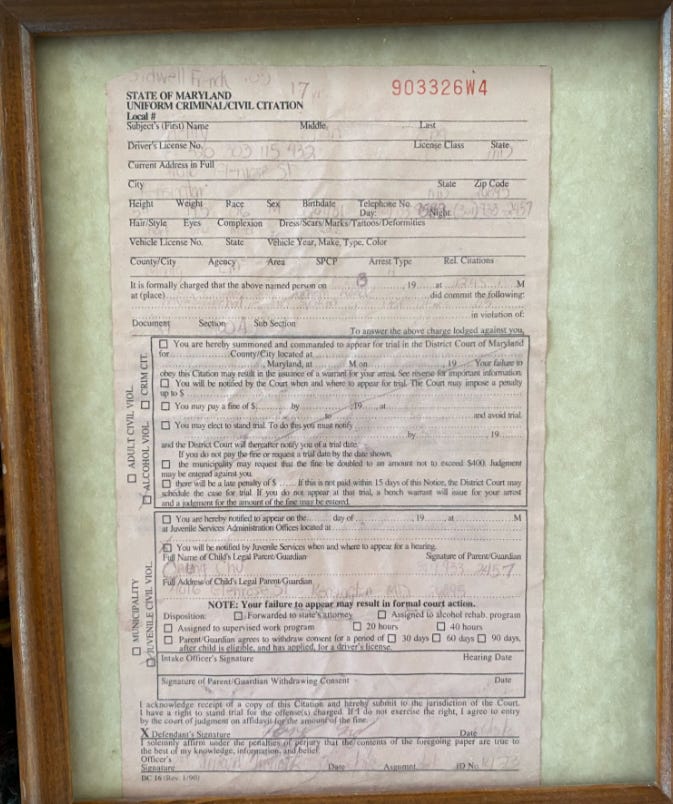
And that was supposed to end it. Not because it actually addressed what we were fighting about, but because invoking my disobedience was meant to remind me that I had no standing to push back at all. A child who has been disrespectful once has forfeited the right to disagree forever. The frustrating part wasn’t even the unfairness. It was that the move worked. There was nowhere to go from there. You can’t argue with “you’re being disrespectful” when the act of arguing is itself the proof.
I’ve read pretty much every other memoir that touches on the Cultural Revolution and it was only through this research I finally understood no matter how logical and rational arguments were, that it would never matter. I grew up with underdog movies. My parents were operating on a completely different system — one that had been running on Chinese hard drives for two thousand years.
Confucianism isn’t just a philosophy. It’s a moral architecture. The whole thing rests on hierarchy: ruler over subject, father over son, husband over wife, elder over younger. A child questioning a parent isn’t just rude. It’s a category error, like a foot trying to give orders to a head. The entire social order depends on the lower party deferring to the higher one. Filial piety isn’t a value you choose. It’s the load-bearing wall of the entire civilization.
This is the cultural water my parents grew up swimming in. And when Mao came along, he didn’t have to invent obedience. He just had to redirect it to remove his political adversaries. The result was a reality more unhinged than anything you could write in a script.
To see what that level of cultural deference actually produces, look at what people went along with during the Cultural Revolution. Teachers were dragged out of classrooms by their own students, forced to wear dunce caps, beaten in front of crowds, sometimes killed. The students doing the beating had been raised, just months earlier, on the absolute Confucian principle that teachers were second only to parents in the hierarchy of respect. But Mao said the teachers were class enemies, and the same instinct that had told them to defer to authority now told them to defer to his.
Parents were denounced by their own children. Husbands and wives turned each other in. Doctors were beaten by patients they had treated. Lifelong friends snitched on each other to prove their revolutionary loyalty. Neighbors watched neighbors get dragged from their homes and said nothing — not because they agreed, but because saying anything would have made them the next target.
That’s what centuries of trained deference look like in a crisis. Not cowardice. Not even agreement. Just the deep instinct that the safest move is always to defer.
Except my parents did push back. They made the most un-Confucian decision imaginable. They left their families. They left their country. They escaped a regime that had weaponized everything they were raised to believe. They didn’t just go against the empire, they went against a cultural weight that only got heavier and heavier over the generations.
But escaping a culture isn’t the same as shedding it. They got out of China, but the wiring didn’t get left behind in Guangzhou. It came with them. And it’s why they never knew what to do with a son who wanted to argue every dinner conversation into the ground. They had risked everything to rebel, but they couldn’t stand it when I did.
And the part of me that wanted to keep arguing? That was American, all the way down. The kid who grew up immersed in American television and film, who believed authority existed to be questioned. That instinct was as deep in me as filial piety was in them.
The friction is still there. It always will be. But there’s something they teach in therapy about how naming a thing doesn’t fix it — it just makes it easier to accept. I can’t argue my parents out of two millennia of Confucianism. They can’t argue me out of growing up in America. We were never going to meet in the middle. We were running two completely different races and neither one of us had the language to explain it. I don’t think we even understood it ourselves until I started rewriting my father’s memoir, and the words for what we’d been doing to each other for forty years finally showed up on the page.
And it’s hard to stay frustrated with them once you understand how difficult it is to outrun your culture. I grew up wishing my parents were more like my non-Asian friends’ parents, who seemed to negotiate with their kids like reasonable people. But if an entire country couldn’t figure out how to push back against the Cultural Revolution, I’m not sure what I expected from my parents at the dinner table. They already overrode something that had been wired across generations once and it took impossible circumstances to do so.
If you enjoyed, you can find past posts that reveal a bit more about our journey crafting this memoir here:
The Story Behind the Story: on memory, inheritance, and becoming the keeper of a life
The Toad that Ate Swan Meat: on family artifacts, improbable inheritance, and proof
The Book I Couldn’t Read: on language, shame, and finally reading my father
One Hundred Pages: on punishment, preparation, and finding the work waiting for me
Impossible Choices: on family, protection, and the cost of survival
The Art of the Cut: on West Coast Swing, learning when to break the rules and deleting my father’s ex-girlfriends
The Island That Wasn’t There: on carry-on luggage, photobooks, and stories that outlast evidence
Could You Survive on That Island: on cruises, 40 years of tragedy and the parenting paradox
You are fast becoming one of my favourite writers. You’re intelligent, insightful and quietly witty. I am desperately awaiting your publication.
That’s a great piece, Henry. I, too, love the framed citation. I can’t beleive it is real! 😂
I never argued with my mom. Her favorite retort when I even questioned her actions was “because I said so!” I also used that on my kids when they were growing up. lol! Didn’t seem to work the same magic, though.