Long Distance
On hurricanes, peeing in bathtubs and unanswered letters

His wife pulled me aside after dinner. “Your Chi-Chao is here almost every weekend, avoiding some of her classmates who try to ask her out. She cries for you,” she said simply. “Every time she speaks of you. Tears like rain. She saves every cent, eats instant noodles and discarded vegetables that the grocery stores don’t want. I told her to prioritize her nutrition. You know what she said?” She paused. “That she needs to save money to help bring you here.”
— Chapter 26 - Letters of Introduction
“Hi, it says my flight tomorrow is cancelled. Can you help me book a new one?”
“Sure. We can get you out Monday, or Tuesday.”
“Could I leave today?”
A pause. “You want to fly back before the hurricane hits New York?”
“…If possible.”
“There’s availability. A lot of people have cancelled. Please hold.”
“Yes sir, we can book you out on the red eye tonight. It’s the last flight cleared to fly to New York.”
The storm wasn’t supposed to hit until the next evening. I had time.
The plane was only half full, and I was able to spread out in my row. Somehow I felt better that there were others foolish enough to fly into a hurricane with me.
As soon as I got to my apartment, I knew what to do. When I had first moved to New York City, a blackout hit that August and lasted for days. I was sitting on a trading floor when it happened. Confusion ran high. Fears of a repeat of 9/11. I remember walking down the middle of Sixth Avenue, weaving through others walking directionless, equally confused. It was hot. We had no A/C. The water worked for a little bit until it didn’t. Electricity slowly returned, most infuriatingly to the block across from us a couple hours before we got it back.
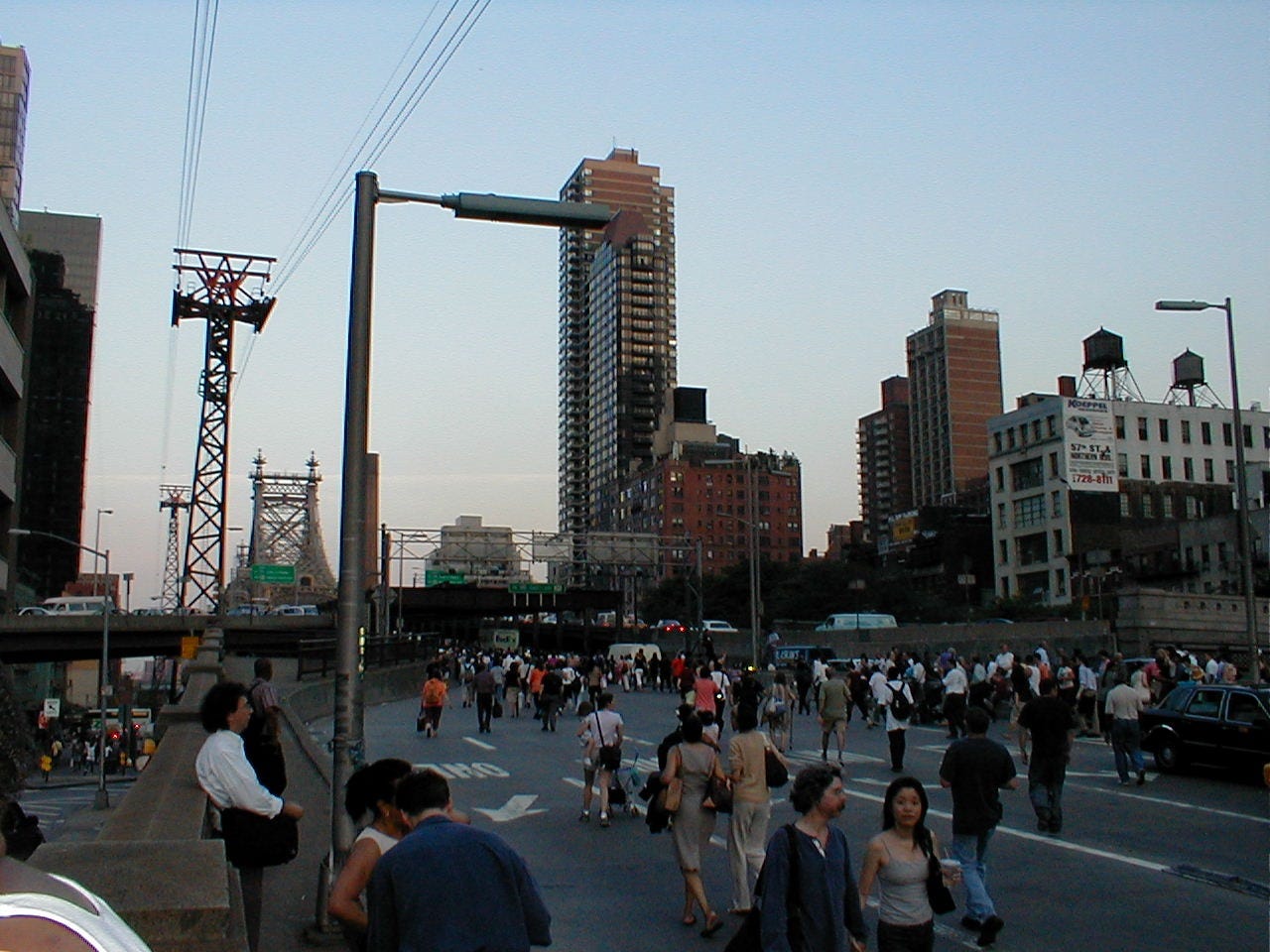
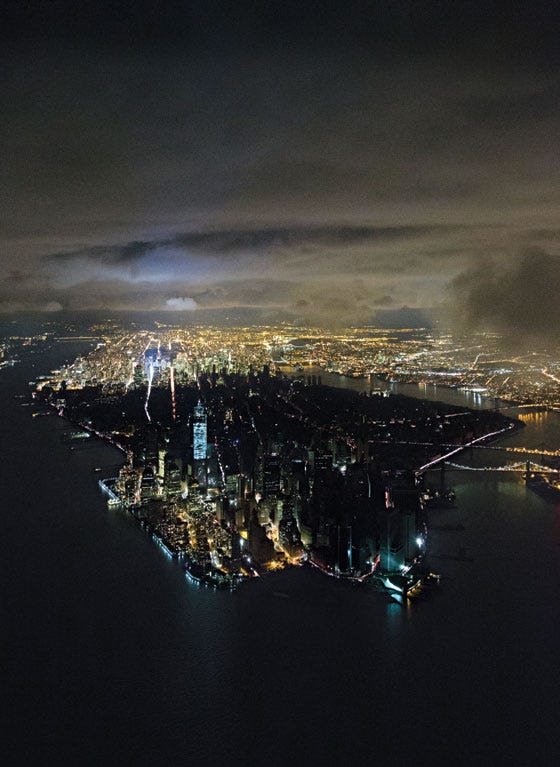
This time I would be prepared. I packed a go bag and charged my phone and iPad. Downloaded movies and TV shows. Ate what I could of the perishables and threw out the rest. Around 6pm the storm hit, and not long after, the power went out. I had already showered and was hunkered in bed watching shows on my iPad. Before going to sleep, I remember looking out the window and seeing how eerily dark it was. In a city where there is always a witness, there was no one.
The next morning, I was still without power.
Work — the entire reason I’d flown into a hurricane — was cancelled.
I called my friend John, who lived on the Upper West Side. He had power and a spare room and said I could come up. I just had to walk sixty blocks or so. So I grabbed my go bag, washed my face, brushed my teeth, and for some reason peed in the bathtub because I thought the water would stop working soon.
Not until I was twenty blocks up, go bag on my shoulder, did I realize how unnecessary that was. The water during the last blackout lasted two days. I could have just used the toilet.
I called my wife when I reached John’s apartment to let her know I was okay. She was in San Francisco, the city I had flown out of, having moved there a month earlier.
We met in New York City and spent nearly eight years there together. But after she graduated from business school, she was determined to get a job in California, where she grew up. I knew this was inevitable. Early on when we started dating, she told me she would go back to California eventually. And even though I knew it was coming, I bawled like a baby as I dropped her off at the airport.
She did not shed a tear.
We had agreed that I would stay in New York at least until the start of the next year to get my bonus before moving out. She felt like it was just a temporary situation. I did not like being without her. Even when she was choosing between business schools, I had convinced her to stay in New York. She relented, much to my delight. But now she was gone, and even though it would only be for four to five months, I could not cope.
Every night, we would FaceTime, not always to talk, but just to feel like the other person was in the room next door. My phone propped up against the rice cooker while I prepared dinner, hers on her desk while she worked. I made it a point to fly out almost every weekend and redeye back. I couldn’t let my work know I was eventually going to quit, certain it would impact my bonus. The plan was to look for jobs remotely and move out at the end of March.
But even the plan was too much distance for me. I told myself my job prospects would be better if I were local. The truth was simpler: I couldn’t do it. By January, I told my work about my situation. They kindly agreed to honor my vested bonus and sent me on my way, which made me wonder what exactly I had flown into a hurricane for.
I moved out and reunited with my wife.
I am not cut out for long distance.
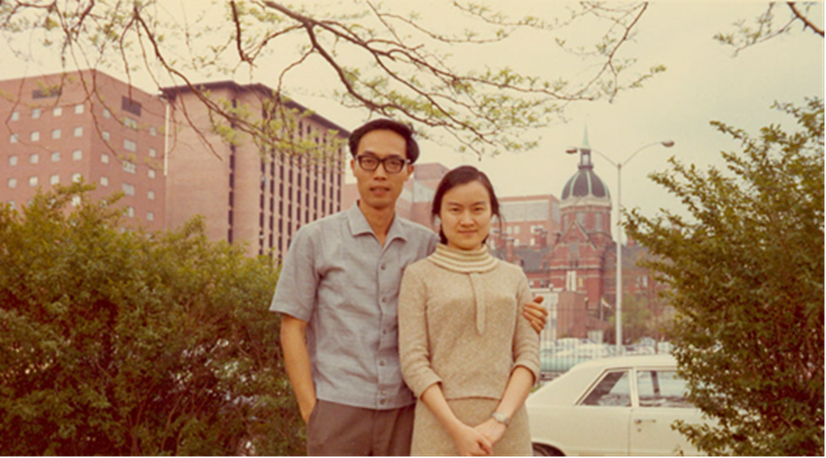
Growing up, the way I heard my parents’ story, my mother went to America and my father went to Canada. They did long distance too. But it always sounded reconcilable, like a couple at two different colleges.
It was only when I got into my father’s manuscript that I discover how off I was in my assumption. He was stuck in Hong Kong for nearly three years, working menial jobs to save enough to leave. America wasn’t available to him. Canada was the closest he could get.
But the thing that struck me most about the Hong Kong chapters was what wasn’t there. My mother. No letters, no phone calls, no mention of missing her. She is the other main character of the book, and for three years she simply disappears from it.
One Tuesday dinner, I brought it up. “Didn’t you talk on the phone? How did you stay in contact?”
“Phones were luxuries in China and Hong Kong back then,” my father responded. “Where I stayed, there was a communal phone for the apartment building. Very expensive to use.”
My mom agreed. “I wrote to your father every week. Sometimes twice a week.”
I looked at my father. He was expressionless.
“Did you write her back?”
“No, not really. Maybe once every now and again.”
“I was lucky to get a letter once a month!” my mother laughed.
“But why?”
“We didn’t know if China was going to take Hong Kong too. The escape, leaving our families behind — it was all worth it as long as one of us made it out.”
“What does that have to do with writing her letters?”
“I didn’t want her to worry about me. I didn’t want to anchor her down. I didn’t know if I would get out.”
He paused, and then continued. “It wasn’t until she threatened to come back that I thought to myself, I really need to get out of here. I can’t have her come back!”
The letters are in the book now. And as I wrote them in, I thought about how each of us had handled the distance in our own way.
I couldn’t stop calling. My wife knew that everything would be fine. My father couldn’t bring himself to write. And my mother, nearly every week for three years, kept sending letters into silence.
All of us certain, somehow, that love would survive whatever form it had to take.
Thank you for reading. If you enjoyed, you can find past posts that reveal a bit more about our journey crafting this memoir here:
The Story Behind the Story: on memory, inheritance, and becoming the keeper of a life
The Toad that Ate Swan Meat: on family artifacts, improbable inheritance, and proof
The Book I Couldn’t Read: on language, shame, and finally reading my father
One Hundred Pages: on punishment, preparation, and finding the work waiting for me
Impossible Choices: on family, protection, and the cost of survival
The Art of the Cut: on West Coast Swing, learning when to break the rules and deleting my father’s ex-girlfriends
The Island That Wasn’t There: on carry-on luggage, photobooks, and stories that outlast evidence
Could You Survive on That Island: on cruises, 40 years of tragedy and the parenting paradox
Two Different Races: on reality TV, Confucianism and naming the unnamed
Blessed: on broken bones, death threats and irrational belief
Don’t Be Scared: on keeping secrets, basketball and the chapter that came to be
Kan Kan: on chicken coops, dormitories and the stranger that connected them
Beautifully written, Henry. It brings back the bittersweet memories of those three years your father and I spent apart. I wrote to him every week from the US, but because our future was so uncertain, he seldom replied—he didn't want to hold me back.
Times certainly changed by the time you and Jaclyn were flying between NY and SF every weekend! The eras change, but that deep, enduring commitment to love through the distance stays exactly the same. I'm so proud of you, and I love your insight.
This is so beautiful! Each of the stories showed a different expression of love, and each touched my heart. Yours of connection and closeness, your father's of sacrifice. So beautifully written. Thank you for sharing this story💚